Barricade
- 4.0
- Rating
- 100.00K
- Installs
- Free
- Price

 Analysis by App-foxy
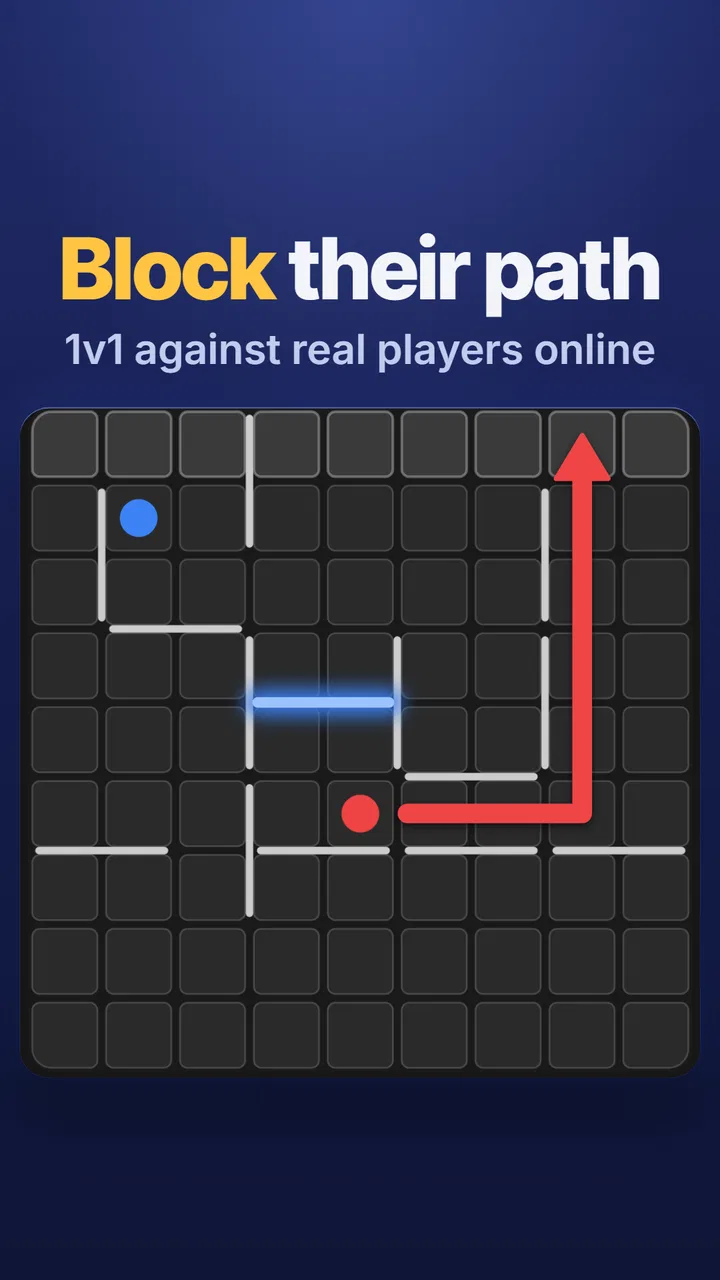
I spent time with Barricade as a compact board game from o7 Games, and my first impression was that its appeal comes from a very clean promise: the rules are approachable, but making consistently good decisions takes patience. That balance makes it easy to start during a short break while still giving each move enough weight to keep the game interesting after the basic idea becomes familiar.
The game is free, rated for Everyone, and sits in the board category rather than trying to present itself as a large, content-heavy mobile adventure. That matters because the experience is focused. You are not opening it for a long story, a collection of unrelated modes, or a stream of distractions. You are opening it to think, react, and see whether your next decision creates an advantage or closes one of your own options.
In my experience, that focus is both its strongest quality and its main limitation. Players who enjoy simple rules with room for careful planning will probably understand the attraction quickly. Players who need constant rewards, elaborate unlocks, or a large sense of progression may find the structure too restrained. The right question is not whether Barricade has endless variety, but whether its central board challenge is satisfying enough to revisit.
You May Also Like

 Blood Strike: 2.5 Anniversary
Blood Strike’s Loadouts Turn Every Drop Into a Tactical Gamble
A close look at Blood Strike’s custom loadouts: how fast access to signature weapons reshapes its battle royale rhythm, rewards preparation, and narrows the gap between fights.

 Pandora - Music & Podcasts
Pandora’s Music Is Easy to Start, but Harder to Recover
Pandora’s strength is its low-effort path from a seed to a station. Its weak spot is how much confidence it asks you to place in connection, setup, and quiet recovery.

 8 Ball Pool
 Is Built on Rivalries, Rematches, and Routine
A close look at the rivalries, rematches, shared routines, and unanswered safety questions that turn a quick pool match into a persistent mobile community.

 Samsung Music
’s Quiet Strength Is Playing What You Already Own
Its reach comes less from spectacle than from dependable access to a personal library. That simplicity is both the app’s strongest retention engine and its ceiling.

 AccuWeather: Weather Radar
AccuWeather Review: A Quick, Clear Forecast for Everyday Decisions
For everyday plans, the best forecast is the one you can understand quickly. AccuWeather makes rain timing, radar, and local conditions easy to act on, with a few trade-offs.

 Hill Climb Racing
Why Hill Climb Racing Still Turns Crashes Into One More Run
A tiny car, a bumpy hill and one more upgrade: Hill Climb Racing keeps resurfacing because its simple chaos makes every near-miss feel personal.
More From Our News Desk



How the first few sessions establish a goal
The opening goal is refreshingly clear: learn how the board behaves, understand what a legal and useful move looks like, and stop treating every available action as equally valuable. The short description calls it “Barricade,” but that single word does not explain why the game can hold attention. The real hook is the gradual shift from simply playing a move to considering what that move leaves behind.
I found the early learning phase most enjoyable when I resisted the urge to rush. A new player can begin by looking for an immediate improvement, but the more useful habit is to inspect the next consequences before committing. That makes the first sessions feel like a practical lesson in board awareness. You are not memorizing a huge rulebook; you are learning to recognize pressure, space, and timing through repeated decisions.
This is also where the game works well for casual players. Someone who has not played many digital board games can approach it without needing a long explanation before starting. The rules are easy to absorb, yet the simplicity does not make every turn automatic. I could introduce the basic idea quickly, then let the other person discover the more subtle choices through play rather than turning the first session into a tutorial lecture.
A realistic use case is a short evening session after work. I might have only enough time for a few focused rounds, and Barricade fits that mood better than a sprawling strategy title. It gives me a defined mental task without asking me to remember a dozen character abilities, manage a large inventory, or follow a long campaign. That makes it a good choice when I want something active but not exhausting.
The early objective also has a useful secondary layer: learning what not to do. In a more complicated board game, mistakes can be hidden among many systems. Here, a poor decision is easier to notice because the board itself becomes the evidence. If an action leaves me boxed in or gives away too much control, I can connect the result to the choice that caused it. That feedback helps the game teach through consequences rather than through excessive explanation.
What progress feels like without a large progression system
Barricade’s progress is mainly personal rather than a parade of visible rewards. I felt improvement when I started spotting threats earlier, preserving useful options, and making decisions with a plan instead of reacting to the most obvious move. That kind of progress is quieter than unlocking a new item, but it can be more satisfying for players who enjoy mastering a ruleset.
The important signal is not a new screen or a pile of collectibles. It is the quality of my thinking. At first, I focused on the move in front of me. Later, I began asking what the position would look like after the opponent’s likely response. That change is the clearest indication that the game is working as a strategy board experience. It rewards attention, not frantic tapping.
There is a practical tip here that made my sessions better: before moving, I pause long enough to identify the most valuable open route and the most dangerous way to lose it. That small routine prevents impulsive play. It also makes mistakes more useful because I can tell whether I misread the board, underestimated a response, or simply chose speed over safety.
Another non-obvious strength is that a simple board can make improvement easier to measure internally. In a complicated game, I may win because a powerful ability carried me or because the opponent made an obvious error. In Barricade, a better result feels more connected to reading the position. That does not guarantee every session will feel fresh, but it gives repeated play a clear purpose: refine judgment.
The trade-off is that players who expect explicit milestones may wonder what they are working toward after the initial learning period. The game’s satisfaction depends heavily on whether you enjoy self-directed improvement. If you need a sequence of unlocks to make each session feel meaningful, this is probably not the most motivating board game for you.
Where the difficulty curve becomes interesting
The difficulty curve is not about suddenly introducing a mountain of new rules. It comes from realizing that the same basic choices become harder to evaluate as the board develops. A move that looks safe in isolation can create a problem several turns later. That delayed consequence is where the challenge grows, and it is why the game can remain more demanding than its first impression suggests.
I appreciate that kind of curve because it does not punish beginners with needless complexity. New players can concentrate on the immediate structure, while experienced players naturally start examining future positions. The game therefore has a gentle entry point without making mastery automatic. Its challenge is built into decision quality rather than into a menu of systems.
One useful way to approach the middle stage is to stop asking, “Can I make this move?” and start asking, “What does this move prevent me from doing later?” That question exposes the central tension. A move can be legal and attractive while still reducing flexibility. Preserving options is often more important than taking the first apparent opportunity.
I also found that the game rewards controlled patience. Acting quickly can feel productive, especially when the board offers an obvious route, but waiting for a clearer position may be stronger. This is a subtle source of difficulty because the game does not need to make the rules harder to make the player think harder. The challenge comes from resisting the impulse to convert every immediate possibility into action.
That said, the curve will not satisfy everyone equally. Players looking for a dramatic escalation, a campaign with new mechanics, or increasingly elaborate scenarios may see the experience as too narrow. Barricade’s challenge grows through understanding, not through a constant stream of new content. Its best audience is comfortable revisiting a familiar framework and finding more depth inside it.
Does the pacing encourage another round?
The pacing works best when I treat the game as a series of concentrated decisions rather than as a long-form destination. A round can function as a quick mental reset, but a close result can also encourage me to try again immediately with a different approach. That repeatability is a natural form of retention: I return because I believe I can read the board better next time.
There is no need for an elaborate reward loop to create that feeling. The pressure comes from the possibility that one better decision would have changed the outcome. When I lose because I acted too soon or failed to protect an important option, the result feels actionable. I can identify a behavior to change, which is more compelling than simply being told to collect another reward.
Still, this kind of retention is selective. It depends on enjoying reflection and replay. If a player sees a loss as a reason to leave rather than an invitation to adjust, the game may not create much momentum. The experience does not appear designed to overwhelm the player with constant reasons to return; it relies on the underlying board problem being enjoyable enough to revisit.
For everyday use, I would recommend setting a small personal goal before playing. Instead of trying only to win, I might focus on keeping more options open, avoiding premature commitments, or recognizing the opponent’s strongest threat earlier. These goals make short sessions feel purposeful and prevent the game from becoming a repetitive search for a result without learning.
That approach also helps with the game’s pacing limitation. Because the core structure is focused, repeated sessions can feel similar if I play without a specific intention. A personal challenge adds variety without pretending that the game is something it is not. It turns a familiar board into a practice space for a particular skill.
How it compares with familiar board-game alternatives
Compared with a traditional physical board game, Barricade is easier to keep ready for an unplanned session. I do not need to find the pieces, clear a table, or persuade someone to sit down before I can begin. That convenience makes it useful for solo downtime or for a quick shared session when a full tabletop setup would be excessive.
Compared with large mobile strategy games, it is much less demanding in terms of attention outside the board itself. There is no need to manage a broad collection of upgrades or learn several interacting systems before a decision becomes meaningful. The advantage is clarity. The disadvantage is that players who enjoy long-term account development may find less to hold their interest.
It also differs from casual puzzle games that offer a constant stream of tiny tasks. Barricade asks for more sustained planning. A puzzle may reward spotting a pattern immediately, while this game is more concerned with how one choice shapes the next position. I prefer Barricade when I want a deliberate contest rather than a sequence of quick visual problems.
On the other hand, a classic board game with a larger ruleset may be the better choice for a group that wants negotiation, varied roles, or a strong social atmosphere. Barricade’s focused design is convenient, but it cannot replace the physical presence and discussion that make tabletop gaming special. I see it as a portable alternative for thinking, not a universal substitute for every board-game night.
Practical details before installing
The game is free to install, which makes trying it low-risk for anyone curious about a focused board experience. It is suitable for Everyone, so it can fit a family-friendly device without relying on mature themes to create interest. I would still choose it based on the player’s taste for strategy rather than age alone, since a simple presentation can conceal decisions that require patience.
It was released on July 13, 2022, and the current version is 2.4.0. The minimum operating-system requirement is Android 6.0, which makes it accessible to many older Android devices. Before installing, I would check that the phone still has a comfortable screen and responsive controls, because board games benefit from being able to inspect the position without feeling cramped.
The game has passed one hundred thousand installs and holds a 4.0 average from roughly three hundred seventy ratings, with nineteen written reviews. Those figures suggest a modest but real player base rather than a huge mainstream phenomenon. I would read that as a reason to approach it with realistic expectations: it is a focused niche-style board game, not a massive social platform that depends on a constantly visible crowd.
In my sessions, the most important preparation was not technical. I played better when I gave myself permission to slow down. If you open it while multitasking, the central decisions can blur together and the game may seem flatter than it is. A quiet few minutes, even on a phone, gives its strategic side a better chance to show itself.
Who should play it, and who should skip it
I would recommend Barricade to someone who likes learning a small ruleset deeply. It is especially suitable for players who enjoy replaying a position mentally, spotting the cost of an attractive move, and improving through observation. It can also work for a person who wants a board game that is easy to start but does not become completely automatic after the first attempt.
It is a good fit for short breaks, quiet commutes when it is safe to play, or an evening when I want a contained challenge instead of a large commitment. The free price makes experimentation straightforward, and the Everyone rating broadens its usefulness for households where several people share a device.
I would skip it if my priority is a deep collection system, a story-driven campaign, or a large variety of modes. I would also look elsewhere if I want a party game built around conversation and laughter. Barricade’s appeal is concentration. It asks me to engage with the board, and that can feel too solitary or too restrained for players who need a more expressive kind of entertainment.
There is another important exception: people who dislike losing to a decision they cannot immediately explain may need patience. The game’s best lessons often arrive after reviewing how a position became difficult. If that process sounds rewarding, the challenge can be motivating. If it sounds frustrating, a more forgiving casual game may be a better match.
My progression verdict
After reviewing its goals, progress signals, difficulty, and replay pressure, I think Barricade succeeds by keeping progression inside the player’s decisions. It does not need to pretend that every session unlocks a new layer. The meaningful advancement is learning to see the board earlier, protect flexibility, and understand why a seemingly good move can create a future problem.
That design gives the game a clear identity. It is not trying to compete with expansive strategy titles on content volume, and it should not be judged by the same standard. Its value comes from a compact challenge that can be learned quickly and polished over time. For me, that is enough to justify returning, especially when I want a thoughtful game that does not demand a long setup.
The limitations are equally clear. Players who rely on external rewards may feel that progress slows once the basic rules are familiar. Repetition can also become noticeable if I play without setting a personal objective. The game is strongest when I bring curiosity and a willingness to improve, not when I expect a constant flow of surprises.
My final recommendation is positive but specific: try it if the idea of mastering a simple board appeals to you. Give the first few sessions enough attention to move beyond obvious choices, and judge the experience by whether your decisions become more deliberate. Barricade is best understood as a small strategy workout, not a content-heavy mobile game. For that particular audience, its focused pacing and quiet sense of improvement make the free download worth considering.
FAQs for Barricade
01What is the primary purpose of Barricade?
Barricade is designed to enhance your mobile device's security by providing real-time protection against malware and phishing attempts. It offers a comprehensive suite of tools that scan apps, files, and websites, ensuring that your personal data remains secure. By using Barricade, users can have peace of mind knowing that their information is protected from potential threats.
02Is Barricade compatible with all Android and iOS devices?
Barricade is compatible with a wide range of Android and iOS devices, offering support for most current operating systems. However, for optimal performance, it is recommended to have a device running Android 8.0 or later, or iOS 12.0 or later. Users should check the app's requirements before downloading to ensure full functionality.
03Does Barricade affect the performance or battery life of my device?
Barricade is optimized to run efficiently in the background, minimizing any impact on your device’s performance and battery life. While it continuously monitors for threats, it uses intelligent algorithms to ensure it doesn’t drain resources. Users typically report negligible effects on performance, making it a seamless addition to their device.
04What features does Barricade offer to enhance security?
Barricade provides a robust set of features, including real-time malware scanning, phishing protection, web browsing security, and a privacy advisor that reviews app permissions. Additionally, it includes a Wi-Fi scanner to detect insecure networks and a data breach alert system that notifies users of potential compromises, offering comprehensive security coverage.
05Is there a free version of Barricade available, and what are the differences with the premium version?
Barricade offers a free version with basic security features, such as malware detection and app scanning. However, the premium version unlocks advanced features like phishing protection, automatic updates, and priority customer support. Users often find the premium version provides enhanced peace of mind with its comprehensive security tools.
Pros
- User-friendly interface for easy navigation.
- Real-time alerts for quick response.
- Customizable settings to fit user needs.
- Minimal impact on device performance.
- Comprehensive protection features included.
Cons
- Limited free version capabilities.
- Occasional false positive alerts.
- Requires regular updates for efficiency.
- May drain battery with prolonged use.
- Advanced features locked behind paywall.

Barricade
Gallery